
Introduction
Fashion is more than just clothing — it’s how you express yourself without even saying a word. Every outfit you wear tells a tiny story about who you are, what you feel, and sometimes even what you dream of. Over the years, fashion has become a global language, blending cultures, creativity, and individuality. From the simplicity of casual wear to the boldness of streetwear, fashion styles give everyone a unique identity in this colorful world.
Understanding different types of fashion styles helps you discover your personal vibe. Maybe you’re someone who loves polished, minimalist looks — or perhaps you’re drawn to loose, flowy boho outfits that whisper freedom. Knowing your style doesn’t just make you look better; it makes you feel more confident and comfortable in your skin.
Fashion trends come and go, but personal style lasts forever. And honestly, there’s no “right” or “wrong” way to dress. It’s all about finding what matches your personality and mood. Some people love mixing streetwear with vintage pieces, while others stay loyal to timeless classics. That’s the magic — you get to play, explore, and create your own version of “you.”
In this article, we’ll dive into the most popular types of fashion styles — from chic and elegant to edgy and experimental. You’ll learn how each style developed, what makes it stand out, and how you can adapt it to fit your everyday life. So, whether you’re looking for a fresh fashion inspiration or trying to define your personal aesthetic, this guide will help you step confidently into your unique sense of style.
What Are Fashion Styles?
Fashion styles are like visual languages — each one says something unique about who you are. A “fashion style” simply refers to a consistent way of dressing or expressing yourself through clothing, accessories, colors, and overall appearance. It’s the personality of your wardrobe, and it tells the world a little about your mood, attitude, and lifestyle.
Over time, fashion styles have evolved drastically. What was once formal and conservative decades ago has transformed into a blend of comfort, creativity, and individuality. Think about it — in the 1950s, structured dresses and tailored suits were the norm. But fast-forward to today, and you’ll see people confidently rocking oversized hoodies, sneakers, and ripped jeans on runways and streets alike. That’s how dynamic fashion is — it keeps changing, reflecting cultural shifts and personal freedom.
Every style is influenced by something — society, art, technology, and even politics. For example, the rise of streetwear came from urban culture, while the bohemian style was inspired by artists and wanderers who valued self-expression over perfection. Even minimalism — that clean, “less is more” vibe — emerged as a reaction to overwhelming consumerism.
Your personal style doesn’t need to fit into one box. You might love a casual look for daily errands, yet choose a chic or edgy outfit for special events. And that’s completely fine. Fashion isn’t about following strict rules; it’s about creating your own identity.
In short, fashion styles are the bridge between how you feel inside and how you show it outside. They evolve, mix, and redefine themselves constantly — just like we do as people. So, finding your style isn’t about imitation; it’s about exploration and self-discovery.
Popular Types of Fashion Styles
Fashion is like a buffet — there’s something for everyone! Whether you love dressing up in elegant pieces or prefer keeping things comfy and casual, there’s a fashion style that perfectly fits your personality. Some people stick to one aesthetic, while others enjoy mixing a few to keep things interesting. The best part? There are no rules.
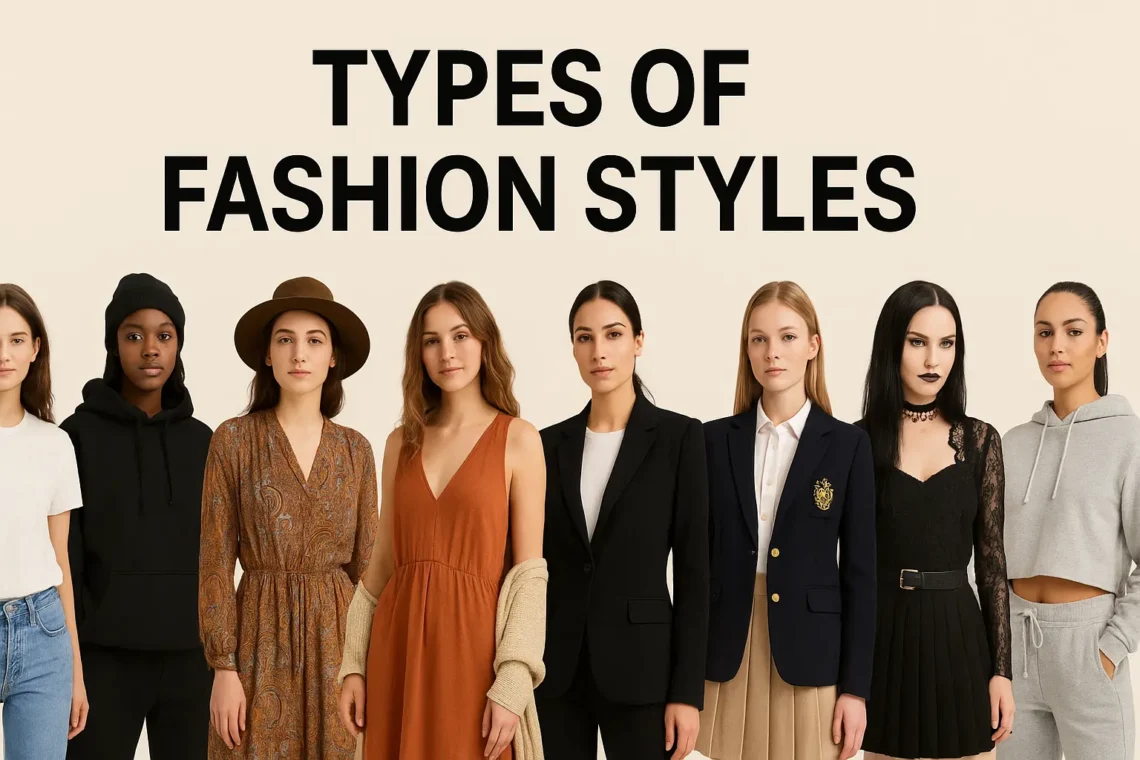
Below are the most popular and timeless fashion styles that continue to shape wardrobes around the world. From bohemian freedom to streetwear boldness, each one tells a different story. Let’s explore them one by one — you might even discover your new favorite look.
Casual Style
Casual style is probably the most loved and universal of all. It’s simple, effortless, and ideal for everyday wear. Think jeans, comfy T-shirts, sneakers, and soft sweaters — pieces that make you feel relaxed yet put together.
What makes casual fashion so appealing is its versatility. You can easily dress it up with a blazer or down with joggers. It’s also inclusive — anyone can wear it, regardless of age or body type. From running errands to meeting friends for coffee, casual outfits keep you stylish without trying too hard.
Another reason people love this style is the comfort factor. In today’s busy world, looking good while feeling at ease matters more than ever. Casual fashion allows freedom of movement and self-expression without unnecessary fuss.
To pull off the perfect casual look, focus on well-fitted basics, neutral colors, and layering. A pair of denim jeans, a plain white tee, and classic sneakers never go out of style. Add a denim jacket or a cozy cardigan, and you’ve nailed it.
In short, casual fashion is all about being yourself — relaxed, real, and ready for anything. It’s not about impressing others; it’s about feeling confident in your skin.
Streetwear Style
Streetwear isn’t just clothing — it’s an attitude. Born from the heart of urban culture, streetwear blends comfort, creativity, and rebellion into one bold expression. It originally came from the skateboarding and hip-hop scenes of the 1980s and 90s, but today it’s a global fashion movement that even luxury brands like Gucci and Balenciaga have embraced.
The beauty of streetwear is how effortlessly it combines casual comfort with statement-making pieces. Oversized hoodies, graphic tees, ripped jeans, joggers, baseball caps, and chunky sneakers — these are the staples. Streetwear doesn’t follow rules; it creates them. Each outfit often features a mix of high-end and everyday brands, reflecting individuality rather than conformity.
Logos and bold graphics play a huge role in this style. They represent community and belonging — wearing your favorite brand’s logo is almost like showing your identity. Popular streetwear brands include Supreme, Off-White, BAPE, and Stüssy, though many smaller independent labels have made their mark too.
The secret behind streetwear’s popularity is its authenticity. It doesn’t pretend to be polished or perfect. It’s about expressing confidence and standing out. Many people who wear streetwear do it to communicate creativity, energy, and freedom. You can experiment with layers, color blocking, and textures to personalize your look.
To pull off streetwear effortlessly, start with one statement piece — like an oversized jacket or eye-catching sneakers — and balance it with simpler basics. Don’t be afraid to mix vintage items or thrift-store finds; they often add character to your outfit.
At its core, streetwear is about owning your story. It’s not about copying others — it’s about feeling cool, comfortable, and unapologetically you.
Vintage Style
Vintage style is like taking a beautiful walk through the past — it celebrates fashion from earlier decades while adding a touch of modern flair. This style is all about nostalgia, individuality, and appreciation for timeless designs that never lose their charm. When you wear vintage, you’re not just wearing clothes; you’re wearing history.
People often confuse vintage with retro, but there’s a subtle difference. “Vintage” refers to authentic clothing from previous eras (like the 70s, 80s, or 90s), while “retro” means modern pieces inspired by those decades. Either way, both capture the old-school spirit that makes this style so distinctive.
A vintage wardrobe often includes flared jeans, high-waisted skirts, polka dot dresses, cat-eye sunglasses, and bold accessories. Each piece tells its own story — sometimes literally, if it’s been passed down or found in a thrift shop. That’s part of the fun: discovering unique treasures that no one else owns.
This style also promotes sustainability, which makes it even more special today. By reusing old clothing and giving it new life, vintage lovers help reduce waste and preserve craftsmanship that modern fast fashion often overlooks.
To embrace vintage fashion, start small. You could add a retro handbag, a classic trench coat, or a pair of vintage boots to your everyday outfits. Mixing modern and old pieces creates balance and prevents your look from feeling like a costume.
The best thing about vintage style is its soul. It connects generations and reminds us that beauty doesn’t expire — it evolves. Whether you’re channeling Audrey Hepburn’s elegance or 90s grunge vibes, vintage fashion gives you endless room to experiment while staying effortlessly timeless.
Bohemian (Boho) Style
Bohemian or Boho style feels like freedom stitched into fabric. It’s relaxed, artistic, and effortlessly beautiful — a perfect blend of creativity and comfort. This style first appeared in the 1960s and 70s, inspired by hippie culture and artists who believed in living freely and expressing individuality. Today, it’s one of the most recognizable and romantic fashion styles out there.
Boho fashion is known for its flowing silhouettes, earthy tones, and nature-inspired details. Think maxi dresses, wide-brimmed hats, peasant blouses, fringed bags, and lots of layered jewelry. Fabrics are usually light and natural — cotton, linen, lace, or crochet. Patterns like florals, paisleys, and ethnic prints are staples of this dreamy aesthetic.
What makes Boho style so appealing is how effortless it looks. You don’t need to plan every piece — it’s more about how it feels. Layering is key: scarves, shawls, bangles, and belts all come together in a way that looks carefree but still chic. It’s perfect for people who value comfort but don’t want to compromise on style.
Bohemian fashion also connects deeply with nature and spirituality. Many Boho lovers choose handmade or sustainable pieces, supporting artisans and ethical brands. It’s not just a look — it’s a lifestyle rooted in authenticity, creativity, and kindness.
To create your own Boho outfit, start with something simple like a flowy skirt or a loose tunic, then build layers using accessories. Don’t be afraid of mixing textures — suede, lace, and denim often blend beautifully.
In essence, Boho style is about embracing imperfection and celebrating individuality. It’s carefree yet thoughtful, wild yet grounded — the perfect harmony between art and soul. When you wear Boho, you’re not following trends; you’re living your story.
Chic Style
Chic style is the definition of elegance in simplicity. It’s clean, polished, and timeless — the kind of look that makes people think, “Wow, they’ve got style,” without you even trying too hard. The word “chic” itself comes from French, meaning stylish or sophisticated, and that’s exactly what this aesthetic stands for.
People who love chic fashion often prefer a minimalist wardrobe filled with well-tailored, high-quality pieces. Think of a crisp white shirt, a tailored blazer, sleek trousers, or a little black dress. The color palette usually stays neutral — whites, blacks, beiges, grays — occasionally highlighted with soft tones like blush, navy, or olive. Accessories are subtle but powerful: gold hoops, leather handbags, or pointed-toe heels complete the look without overwhelming it.
The charm of chic style lies in how effortless it feels. You don’t need to wear loud prints or glittery fabrics to stand out. The focus is on fit, fabric, and finesse. Every piece looks intentional, even if the outfit is simple. It’s ideal for professional settings, social events, or even a casual day when you want to look refined yet relaxed.
Chic fashion also reflects confidence. When you dress chic, you project calmness, control, and class — like someone who knows their worth but doesn’t need to show off. It’s often associated with icons like Audrey Hepburn and Victoria Beckham, who mastered the art of minimal yet striking fashion.
To create your own chic wardrobe, invest in quality basics that you can mix and match. Tailored pants, structured blazers, and neutral tops go a long way. Keep makeup and accessories understated but elegant.
In short, chic style is timeless sophistication — the kind that never shouts, just quietly impresses. It’s simple, smart, and endlessly graceful.
Preppy Style
Preppy style is all about clean cuts, crisp details, and a polished vibe that never goes out of fashion. It’s inspired by the classic looks of Ivy League students from the mid-20th century — think school uniforms, blazers, and timeless patterns. But don’t let that fool you — modern preppy fashion is anything but boring. It’s youthful, classy, and full of charm.
This style is often defined by structured silhouettes and subtle coordination. Picture collared shirts layered under sweaters, pleated skirts, loafers, and pearl accessories. Colors are usually soft and refined — pastel blues, whites, beige, navy, and sometimes pops of red or green for contrast. Patterns like plaid, stripes, and argyle are common, giving off that sophisticated yet playful vibe.
Preppy fashion says “put-together” without looking stiff. It’s perfect for people who like their outfits neat but not overly formal. The secret lies in the layering — pairing a button-down shirt under a cardigan or sweater vest instantly elevates your look. For men, chinos and polo shirts are must-haves; for women, A-line skirts, tailored blazers, and ballet flats create that signature prep-school aesthetic.
What’s interesting about preppy style today is how it’s evolved. It’s no longer limited to elite schools or social circles — anyone can wear it, mix it, and make it their own. Many fashion lovers now blend preppy elements with streetwear or chic pieces to create modern, balanced outfits.
If you’re trying to pull off a preppy look, focus on structure, neatness, and a hint of tradition. Keep your accessories simple, your shoes polished, and your confidence high.
At its heart, preppy fashion celebrates sophistication with a youthful twist. It’s the style that says, “I care about how I look — but I also like to have fun.”
Grunge Style
Grunge style is messy, raw, and unapologetically cool — it’s the fashion equivalent of saying, “I don’t care, but somehow I still look amazing.” Born in the 1990s during the rise of grunge music in Seattle, this look was inspired by bands like Nirvana and Pearl Jam. What started as a rebellion against flashy, mainstream fashion soon became a cultural statement.
The essence of grunge is comfort and individuality. Think oversized flannel shirts, ripped jeans, band tees, combat boots, and layers that look thrown together but feel perfectly authentic. There’s usually a lot of plaid, dark tones, and denim. Fabrics are rugged — not polished or “perfect.” It’s the opposite of sleek or glamorous, yet somehow it stands out because of its honesty.
What makes grunge fashion timeless is its message: be yourself, even if you don’t fit in. It’s anti-trend, anti-perfection, and fully expressive. People who embrace this style often love mixing vintage and thrifted pieces, giving old clothes new life. Accessories like chokers, beanies, and distressed jackets add that extra edge.
Modern grunge has evolved slightly, often mixed with streetwear or punk influences. You might see a blend of baggy jeans with a cropped top or heavy boots paired with feminine skirts — it’s flexible, unfiltered, and confident.
To pull off grunge style, focus less on “matching” and more on “mood.” Layer textures like flannel, denim, and leather, and don’t stress about neatness — that’s the point. Let your clothes feel lived-in, personal, and a bit rebellious.
Grunge fashion isn’t about chasing trends — it’s about creating your own comfort zone and owning it. It’s raw, relatable, and refreshingly real, making it one of the most iconic styles that refuses to fade away.
Gothic Style
Gothic style is dark, dramatic, and deeply expressive — a look that embraces mystery and individuality. It’s not just about wearing black; it’s about channeling emotion, depth, and confidence through fashion. This style first took shape in the 1980s, inspired by the punk scene and gothic rock music. Over time, it’s grown into an art form that balances elegance with edge.
At first glance, Gothic fashion might seem intimidating, but it’s actually very sophisticated. The palette usually revolves around black, deep burgundy, dark purple, or midnight blue. Fabrics like lace, velvet, and leather create that rich, textured look. Common pieces include corsets, long coats, chokers, boots, and flowing skirts — all with intricate detailing. Accessories often feature crosses, silver jewelry, and sometimes Victorian-inspired designs that add a touch of romance to the darkness.
What makes the Gothic style special is how personal it feels. It’s often a way for people to express individuality and inner strength, rather than simply following trends. There’s a sense of rebellion in it — a quiet refusal to blend in. Whether it’s a full head-to-toe Gothic outfit or just subtle hints like a black lace top or bold eyeliner, the essence lies in attitude.
Modern Gothic fashion has also evolved. Today, there are many variations — from romantic Goth with elegant gowns to cyber-Goth with futuristic elements. It’s versatile and creative, letting people play with intensity and emotion.
If you want to try the Gothic style, start simple — maybe with darker tones, statement boots, or a leather jacket. Layering different textures makes the look come alive.
In short, Gothic fashion is powerful. It’s not just about darkness — it’s about confidence, mystery, and the beauty found in contrast.
Athleisure Style
Athleisure style is where comfort meets confidence. It’s that perfect blend of sporty and stylish — the kind of fashion that lets you look great while feeling like you’re still in your favorite gym clothes. Over the past decade, athleisure has gone from a casual weekend trend to an everyday wardrobe essential, loved by everyone from students to celebrities.
The name says it all — a mix of “athletic” and “leisure.” The idea is simple: clothes that can take you from a workout to brunch without needing to change. Leggings, joggers, hoodies, sports bras, crop tops, and sneakers are key pieces. Brands like Nike, Adidas, and Lululemon helped popularize the look, while newer labels continue to make it fresher and more fashion-forward.
What makes athleisure stand out is its versatility. You can dress it up or down depending on your plans. Pair yoga pants with an oversized denim jacket for a casual day out, or throw on a sleek blazer over a sports top for a trendy street look. It’s comfort that doesn’t sacrifice style — and that’s exactly why people love it.
Athleisure also fits perfectly with the modern lifestyle. With busy schedules and a growing focus on health and movement, people want clothing that’s flexible and functional. Breathable fabrics, stretchable fits, and minimalist designs make it easy to move through the day with ease.
If you’re building an athleisure wardrobe, focus on quality basics in neutral tones — black, gray, beige, and white — then mix in pops of color through sneakers or accessories. The key is balance: sporty, but sleek.
In essence, athleisure isn’t just a fashion trend; it’s a lifestyle. It celebrates comfort, movement, and confidence — proving that style doesn’t have to be stiff to be stunning.
Conclusion
Fashion isn’t just about clothes — it’s about identity, creativity, and confidence. Every person has their own unique way of expressing themselves, and the different types of fashion styles are simply the tools that help you do that. From the relaxed comfort of casual wear to the rebellious edge of grunge or the elegance of chic fashion, each style tells a story about who you are and what inspires you.
The best thing about fashion is that it has no boundaries. You don’t have to stick to just one look. Mix vintage with streetwear, add a bit of Boho flair, or pair sporty athleisure with sleek chic — the possibilities are endless. What matters most is how your outfit makes you feel.
In 2025, fashion continues to evolve with sustainability, individuality, and comfort taking center stage. Whether you prefer minimalist sophistication or bold, artsy expression, remember — the most stylish thing you can ever wear is confidence. Fashion fades, but personal style? That’s forever.
So go ahead, explore, experiment, and embrace the fashion styles that make you feel the most you. Because true style isn’t about fitting in — it’s about standing out by being authentically yourself.
FAQs
1. What are the main types of fashion styles?
Some of the most popular fashion styles include casual, streetwear, vintage, Bohemian, chic, preppy, grunge, artsy, Gothic, and athleisure. Each has its own mood and aesthetic, allowing you to express different sides of your personality.
2. How can I find my personal fashion style?
Start by exploring what feels natural to you. Look at your favorite colors, fabrics, and outfits you feel confident in. Experiment with different styles — your personal fashion will reveal itself naturally.
3. Can I mix different fashion styles together?
Absolutely! Many people mix casual with chic or vintage with streetwear. Fashion is fluid — it’s all about creativity and balance.
4. Which fashion styles are trending in 2025?
Sustainable fashion, techwear, minimalism, and relaxed athleisure are huge trends in 2025. People are prioritizing comfort, quality, and self-expression over fast-changing trends.
5. What’s the difference between fashion and style?
Fashion refers to the current trends in clothing, while style is your personal way of expressing yourself through those trends. Fashion changes — style stays uniquely yours.